


Your trusted partner in manufacturing digital transformation
Think Next Co., Ltd is based in Ho Chi Minh City, the heart of Vietnam technology and economic. We have branch offlice in Hanoi, Danang. We provide professional with enterprise solutions
Certified Experts
Average Cost Savings
Top 9 Manufacturing Management Challenges
Ranked by Urgency and Business Impact
The challenge: Manufacturing costs continue to rise, but management lacks the visibility and control needed to identify and eliminate the root causes.
Increasing raw material prices, labor costs, production waste, and hidden operational inefficiencies can gradually erode profit margins. Without accurate cost data and timely reporting, management struggles to determine where costs are increasing, which production activities are unprofitable, and what corrective actions will deliver the greatest financial impact.
Business impact: Lower profit margins, excessive operating expenses, inefficient resource utilization, and reduced competitiveness.
The challenge: Production schedules are frequently disrupted, resulting in missed delivery commitments and inconsistent on-time delivery performance.
Inaccurate production schedules, material shortages, unplanned changes in customer demand, and limited coordination between departments make it difficult to execute production plans as intended. When production and material availability are not synchronized, orders may be delayed even when sufficient inventory exists elsewhere in the factory.
Business impact: Customer dissatisfaction, lost sales opportunities, higher expediting costs, and damage to customer relationships and business reputation.
The challenge: Management cannot access reliable, consistent, and timely operational data to make informed decisions.
Different departments maintain separate spreadsheets and reports, often using inconsistent definitions and reporting methods. Data consolidation is time-consuming, and manual reporting increases the risk of errors. By the time reports reach senior management, the information may already be outdated, making it difficult to identify problems and respond promptly.
Business impact: Delayed decision-making, limited operational visibility, inconsistent performance measurements, and a greater risk of decisions based on incomplete or inaccurate information.
The challenge: The factory holds excessive inventory while still experiencing shortages of critical materials or finished products.
Inaccurate bills of materials (BOMs), unreliable inventory records, poorly coordinated purchasing plans, and inadequate production planning can create an imbalance between supply and demand. Some materials accumulate in warehouses while essential components are unavailable when production needs them.
Business impact: Excess working capital, higher storage costs, obsolete inventory, production interruptions, and missed delivery commitments.
The challenge: Product quality varies, and defect rates remain high because quality processes are not sufficiently standardized or controlled.
When inspections rely heavily on manual activities, inspection criteria differ between operators, or production data cannot be traced effectively, defects may go undetected until later production stages or after products reach customers. Without reliable lot traceability and systematic root-cause analysis, corrective actions may address symptoms rather than prevent recurrence.
Business impact: Increased scrap and rework costs, customer complaints, warranty claims, quality-related delivery delays, and potential damage to the company’s reputation.
The challenge: Critical manufacturing operations depend heavily on individual employees, supervisors, or experienced specialists. When these individuals are absent, resign, or change roles, essential knowledge and operational continuity may be lost.
Work instructions, standard operating procedures, operational records, and decision-making rules may not be sufficiently documented or embedded in standardized processes. As a result, employees rely on personal experience and informal communication rather than consistent, repeatable ways of working.
Business impact: Operational disruptions, inconsistent execution, longer employee training periods, loss of organizational knowledge, and increased business continuity risks.
The challenge: The factory reacts to demand fluctuations, material shortages, and production disruptions only after problems have already occurred.
Without timely operational data, reliable demand forecasts, and effective planning capabilities, managers have limited visibility into future material requirements, production capacity constraints, and potential delivery risks. Decisions are often based on historical reports rather than current conditions and forward-looking information.
Business impact: Slow responses to market changes, frequent schedule adjustments, excess or insufficient inventory, inefficient capacity utilization, and reduced customer responsiveness.
The challenge: Machines experience unplanned downtime, maintenance activities are poorly coordinated, and production losses are not systematically measured or addressed.
Equipment failures, lengthy changeovers, minor stoppages, reduced operating speeds, and quality losses can significantly reduce effective production capacity. Without reliable performance data and structured maintenance planning, managers may struggle to distinguish between recurring equipment problems and other sources of production inefficiency.
Business impact: Lower throughput, increased maintenance and operating costs, missed production targets, reduced asset utilization, and higher cost per unit.
The challenge: As the business grows, existing processes and management systems cannot keep pace with increasing production volumes, product complexity, customer requirements, and organizational demands.
Manual reporting, disconnected applications, inconsistent procedures, and excessive reliance on individual knowledge may be manageable at a small scale but become major bottlenecks as operations expand. Without integrated data and standardized workflows, management has limited ability to maintain control across multiple production lines, facilities, and business units.
Business impact: Rising administrative overhead, declining operational consistency, limited management visibility, increased execution risks, and difficulty sustaining profitable growth.
Our advanced manufacturing solutions & services
We provide your enterprise business some Effective Solutions allows you to use more simple

Coaching 15-30 days. Identify waste, reduce process variation, improve productivity, and strengthen standardized work.

Integrate business and manufacturing processes, improve information visibility, and support more consistent, data-driven decision-making. We have already AI Agent integrated with QAD ERP.

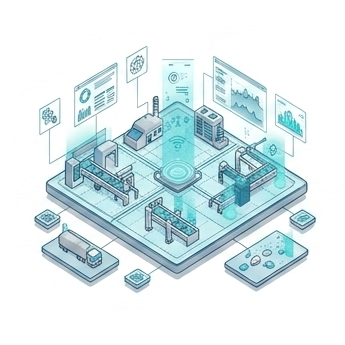
Real-Time Visibility with Manufacturing Execution Systems (MES) Gain complete control over your shop floor. Capture, blend, and analyze live production data across disparate systems, powered by ERP integration.

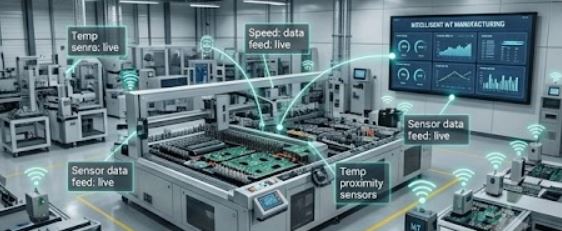
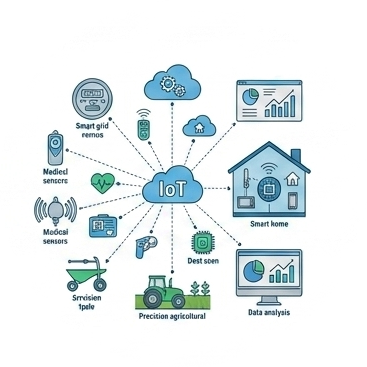
Connect Industrial IoT Networks Enable equipment monitoring, energy management. Smart IoT systems integrate sensors, smart grids, and automated devices for seamless data exchange.
Why choose Think Next
Digital transformation isn’t just about software – it’s about rewriting your operational efficiency. At Think Next, we merge decades of manufacturing expertise with cutting-edge automation to build smart, resilient, and highly cost-effective factories.

We bring nearly two decades of deep, hands-on experience in the manufacturing sector to solve your most complex operational puzzles.

Our team consists of genuine, highly certified consultants and technicians who strictly adhere to international implementation standards

We don't just look at code; we deeply understand your unique business bottlenecks, challenges, and long-term strategic goals.

No one-size-fits-all. We deliver exactly the right, custom-fit digital solutions that match your specific budget and operational scale.
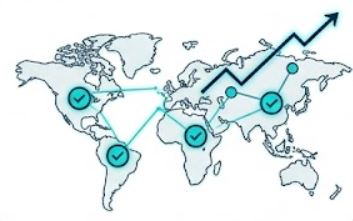
Trusted by a diverse portfolio of successful deployments across the Asia region and global markets.

From initial advisory and system development to seamless integration and lifetime technical support, we walk with you every step of the way.

Our Core Expertise: Driving Manufacturing Excellence
The objective is to help manufacturers move from reactive problem-solving toward proactive, measurable, and sustainable operational excellence.
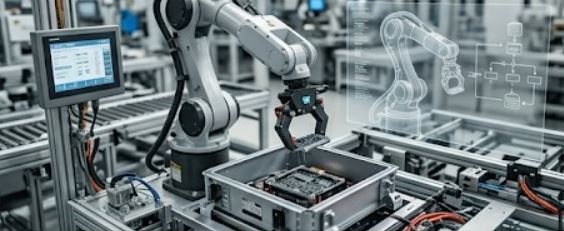
We analyze and restructure workflows using Lean Six Sigma and Kaizen methodologies to eliminate waste, optimize productivity, and drive sustained operational excellence.
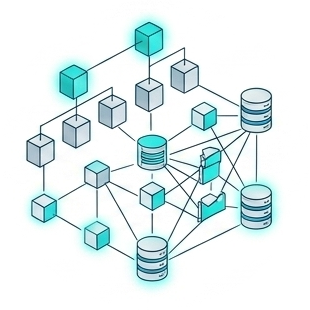
We deploy industry-tailored QAD Adaptive ERP frameworks to seamlessly integrate shop floor production, optimize supply chains, and enhance overall enterprise profitability.
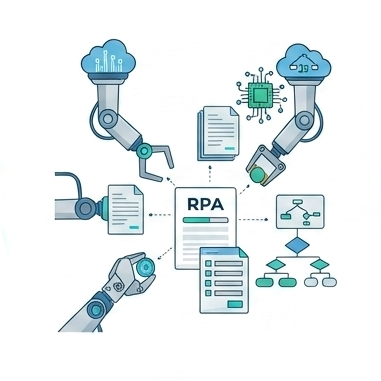
We implement software-driven RPA bots and intelligent automation to eliminate repetitive manual workflows, reduce operational errors, and scale human resource efficiency.
We build next-generation manufacturing ecosystems by integrating connected IoT networks and real-time MES data analytics to grant complete transparency over your operations.
Ready to start your digital transformation?
Book a 30-minute consultation with our experts to assess your current state and shape a roadmap fit for your business.
Think Next specializes in highly regulated and complex manufacturing sectors. Our core focus includes Automotive, Electronics & High-Tech, Industrial Equipment, Medical Devices, and Food & Beverage (F&B) industries. We tailor the QAD Adaptive ERP framework to match the specific compliance and supply chain demands of each sector.
We believe technology is only as good as the process it supports. Before writing code or deploying systems, our consultants analyze your current workflows using Lean Six Sigma and Kaizen methodologies to eliminate operational waste. This ensures that when the ERP or RPA systems are implemented, they automate highly optimized, efficient processes rather than broken ones.
Absolutely. Our Industrial IoT and Smart Factory solutions are designed to bridge the gap between legacy hardware and modern digital infrastructure. We utilize advanced sensors, edge computing, and custom integration protocols to extract data from older shop floor machines, feeding real-time analytics directly into your MES and ERP networks.
Automation projects are highly agile. We begin with a proof-of-concept (POC) to identify the repetitive manual tasks that offer the highest ROI when automated. A standard RPA bot deployment can take anywhere from 4 to 12 weeks, depending on the complexity of the systems involved. We provide full end-to-end lifecycle support, from workflow mapping to post-launch bot maintenance.
Yes, digital transformation is a continuous lifecycle. Think Next provides comprehensive, long-term technical support and system optimization services. Whether you need ongoing software updates, custom feature development, or 24/7 technical assistance for critical infrastructure, our certified engineers are always available to ensure zero operational downtime.
Our partners
By sharing your email, you agree to our Privacy Policy and Terms of Service